Thursday, January 07, 2010
8:26 AM | Posted by
terry blackburn |
Edit Post
"I do not like broccoli. And I haven't liked it since I was a little kid
and my mother made me eat it. And I'm President of the United
States and I'm not going to eat any more broccoli."
- George Bush, U.S. President, 1990
Well, following on from yesterday, i can tell you that my second most viewed Article ever is the one reproduced below. This was written in November 2006 and has been viewed 6481 Times according to my Publisher. Hope you enjoy it!
and my mother made me eat it. And I'm President of the United
States and I'm not going to eat any more broccoli."
- George Bush, U.S. President, 1990
Well, following on from yesterday, i can tell you that my second most viewed Article ever is the one reproduced below. This was written in November 2006 and has been viewed 6481 Times according to my Publisher. Hope you enjoy it!
Growing Broccoli & Calabrese
The name 'Broccoli' comes from the Italian word 'Brocco' which means branch or arm. Broccoli is the flowering head of the plant; if you leave Broccoli after cutting too long you will see the green buds turn into yellow flowers it will taste considerably better if you eat it before it does this.
Broccoli is one of the healthiest foods you can eat, it contains a high percentage of vitamin C, one portion is equal to the recommended daily allowance of this essential vitamin, and it also contains vitamin A and folacin. The florets are richer in vitamins than the stalk. It also contains phylochemicals such as sulforaphane that are believed to protect against cancer. It is a delight for weight watchers as it contains only 28 calories per serving.
There are two types of Broccoli - curdling and sprouting. Whilst the curdling types produce white heads that are similar in appearance to cauliflower. The sprouting types, have numerous side shoots with tiny heads, these are purple. Calabrese is often called 'green sprouting' it is less hardy, with a delicate asparagus-like taste. When cooked, broccoli should still be slightly crunchy, this way it will still retain the vitamins, over cooking also ruins the texture of this delicious vegetable.
Soil Preparation
Broccoli will grow in almost any soil type that has been well manured. They do best in firm ground and benefit if planted in ground that has been vacated by such crops as potatoes, broad beans or early peas. If they are to follow any of those crops, the soil need only to be forked over and a dressing of fish manure with 10 per cent potash content at 4 oz. (120g) to the sq. yd. can be added, then the ground can be firmed down and made level. Unless the soil is already chalky, dress with carbonate of lime at 4 oz. (120g) to the sq. yd. It is important to remember that if a top dressing of lime is given, not to give nitrogen late in the season, as this will encourage soft growth and the plants will not be hardy.
Sowing
Autumn varieties are sown in mid April but slightly later in the south. Sow winter varieties later, the spring ones can be sown a week or so after that. For very late broccoli the end of May should be fine. The time to sow is determined by the variety and the guidelines can be found on the seed packet. Narrow seedbeds are fine; they need not be wider than 3 ft. (90cm) Make drills about 6 in. apart and ½ in. (12mm) deep. The seed should be sown thinly, and then the soil is raked over the drill to cover the seeds and firmed over.
Planting
In the south seedlings can be planted out in June, in other areas it may be July when main crops are planted out. The rows should be 2-½ ft. (75cm) apart with about 2 ft. (60cm) between each plant. Plant them firmly, up to their lower leaves is best. Make sure that they are well watered if the weather is dry.
General Care
Using a draw hoe take out a furrow between the rows at the end of August or early September. This action will earth up the soil around the roots, which will help them from becoming waterlogged.
Growing plants at an angle can protect them from damage that can be done by early morning sun following a frost. It is a simple manoeuvre, which involves removing the soil to a depth of 9 in. (228mm) on the north side of each broccoli plant and pushes it over carefully with the head towards the north. During a hard winter, in February, give the plants a feed of nitrate of potash at 1 oz. (30g) to the sq. yd.
Harvesting
Cut the white curds as soon as they are ready and this is before they start to open up.
Sprouting Broccoli
The plants are hardy and the heads if harvested before they are open are a very good flavour.
Soil Preparation
As for curding broccoli.
Sowing
These are sown in April or early May in a seedbed similar to that for curding broccoli.
Planting
The plants require plenty of room for development, putting out the early varieties 2 ft. by 2 ft. (60cm) and the late 2-½ ft. by 2-½ ft. (75cm). Plant firmly and water well.
General Care
Lightly hoe the soil during summer but do not heel the plants over as for curding broccoli.
Harvesting
The flowering shoots grow out from the axils. When the shoots are about 12 in.(30cm) long, cut them to within 2 in. (50mm) of their base; this generally results in more shoots produced later.
The name 'Broccoli' comes from the Italian word 'Brocco' which means branch or arm. Broccoli is the flowering head of the plant; if you leave Broccoli after cutting too long you will see the green buds turn into yellow flowers it will taste considerably better if you eat it before it does this.
Broccoli is one of the healthiest foods you can eat, it contains a high percentage of vitamin C, one portion is equal to the recommended daily allowance of this essential vitamin, and it also contains vitamin A and folacin. The florets are richer in vitamins than the stalk. It also contains phylochemicals such as sulforaphane that are believed to protect against cancer. It is a delight for weight watchers as it contains only 28 calories per serving.
There are two types of Broccoli - curdling and sprouting. Whilst the curdling types produce white heads that are similar in appearance to cauliflower. The sprouting types, have numerous side shoots with tiny heads, these are purple. Calabrese is often called 'green sprouting' it is less hardy, with a delicate asparagus-like taste. When cooked, broccoli should still be slightly crunchy, this way it will still retain the vitamins, over cooking also ruins the texture of this delicious vegetable.
Soil Preparation
Broccoli will grow in almost any soil type that has been well manured. They do best in firm ground and benefit if planted in ground that has been vacated by such crops as potatoes, broad beans or early peas. If they are to follow any of those crops, the soil need only to be forked over and a dressing of fish manure with 10 per cent potash content at 4 oz. (120g) to the sq. yd. can be added, then the ground can be firmed down and made level. Unless the soil is already chalky, dress with carbonate of lime at 4 oz. (120g) to the sq. yd. It is important to remember that if a top dressing of lime is given, not to give nitrogen late in the season, as this will encourage soft growth and the plants will not be hardy.
Sowing
Autumn varieties are sown in mid April but slightly later in the south. Sow winter varieties later, the spring ones can be sown a week or so after that. For very late broccoli the end of May should be fine. The time to sow is determined by the variety and the guidelines can be found on the seed packet. Narrow seedbeds are fine; they need not be wider than 3 ft. (90cm) Make drills about 6 in. apart and ½ in. (12mm) deep. The seed should be sown thinly, and then the soil is raked over the drill to cover the seeds and firmed over.
Planting
In the south seedlings can be planted out in June, in other areas it may be July when main crops are planted out. The rows should be 2-½ ft. (75cm) apart with about 2 ft. (60cm) between each plant. Plant them firmly, up to their lower leaves is best. Make sure that they are well watered if the weather is dry.
General Care
Using a draw hoe take out a furrow between the rows at the end of August or early September. This action will earth up the soil around the roots, which will help them from becoming waterlogged.
Growing plants at an angle can protect them from damage that can be done by early morning sun following a frost. It is a simple manoeuvre, which involves removing the soil to a depth of 9 in. (228mm) on the north side of each broccoli plant and pushes it over carefully with the head towards the north. During a hard winter, in February, give the plants a feed of nitrate of potash at 1 oz. (30g) to the sq. yd.
Harvesting
Cut the white curds as soon as they are ready and this is before they start to open up.
Sprouting Broccoli
The plants are hardy and the heads if harvested before they are open are a very good flavour.
Soil Preparation
As for curding broccoli.
Sowing
These are sown in April or early May in a seedbed similar to that for curding broccoli.
Planting
The plants require plenty of room for development, putting out the early varieties 2 ft. by 2 ft. (60cm) and the late 2-½ ft. by 2-½ ft. (75cm). Plant firmly and water well.
General Care
Lightly hoe the soil during summer but do not heel the plants over as for curding broccoli.
Harvesting
The flowering shoots grow out from the axils. When the shoots are about 12 in.(30cm) long, cut them to within 2 in. (50mm) of their base; this generally results in more shoots produced later.
Terry Blackburn. Internet Marketing Consultant, living in South Shields in the North-East of England. Author and Producer of blog http://www.lawnsurgeon.blogspot.com Author of "Your Perfect Lawn," a 90 Page eBook devoted to Lawn Preparation, Lawn Care and Maintenance. Article Source: http://EzineArticles.com/?expert=Terry_Blackburn |
Wednesday, January 06, 2010
4:47 PM | Posted by
terry blackburn |
Edit Post
You know it's a funny old world. I got a notification from my Publishers Ezine Articles.com this morning giving me statistics on my top 3 viewed Aricles of all time and guess what - this really blew me away - top of the heap was an Article I wrote some years ago on "How to Grow Courgettes" - of all things!!! I had forgotten all about this one but it seems popular as 8590 people have viewed it.
So for old times sake and just for you here it is again in all its glory!
How to Grow Courgettes!
Courgettes are a firm fleshy vegetable, which has grown in popularity over the years. It is in the gaud section of the cucumber family, which includes marrows, squashes and pumpkins. Courgettes are an easy crop to grow; children are fascinated with their flowers and excited by the crops rapid growth. Plants like these kindle interest in gardening at an early age which gives hope for the future, for once the passion for growing plants and good quality home grown foods has been kindled, it generally continues throughout a person's life.
Courgettes are best eaten soon after harvesting them when they are fresh and at the peak of their flavour. In cooking, courgettes can be boiled, steamed, baked, fried, grilled and roasted. They have a delicate flavour so can be cooked with herbs to add variety.
Soil Preparation
Courgettes prefer heavier soils; they do best in positions where there is shelter from cold winds and they must have a sunny site. When preparing the ground, add plenty of manure and compost where the plants are to grow. Begin by digging a trench 4 in. (101mm) deep put in the manure then dig another putting the soil from this into the first trench. This will form a ridge; the courgettes can be planted into the ridges, 3 ft. (90cm) apart.
Sowing Under Cover
Sow the seed mid March through to late May putting two seeds into the pot ½ in. (12mm) deep, at a temperature of 65 to 70 deg F. (18 to 21 deg C.) the weaker one can be removed if they both germinate. Harden off the young plants by putting the first sowing into cold frames at the end of May. Plant them out after about two or three weeks along the ridges when the chance of frost has passed.
Sowing Direct
Sowing direst into the ground where they are to grow sowing two seeds per station, this can be done in mid May until early June at about 3 ft. (90cm) apart. When the seeds have germinated they can be thinned out removing the less vigorous seedling.
Planting
Water the pots well before planting out. Avoid holding the plants by their stems as they are easily bruised causing them irreparable damage. If the weather is cool cover each plant with a cloche for the first week to give them a little warmth and protection. One of the best methods I find is to use a half of a clear plastic 5 litre mineral bottle. Cut into half, the bottle makes two excellent cloches. The top half, whilst giving protection also allows air and moisture through the neck of the bottle onto the plants. To prevent flying insects entering through the neck, I secure a small piece of fleece with an elastic band.
General care
Courgettes require plenty of water so that they are able to grow and fully develop, soak the roots thoroughly and regularly. For extra protection against the surface roots from drying out, grass clippings can be used as mulch. They are generally trouble free if the summer is a good one, however slugs can sometimes be a problem; to be on the safe side, position a few slug traps around the base of the plants. Cold conditions could restrict the activity of pollinating insects and so the fruits may fail to set. Should this happen it may be necessary to assist with pollination by removing a male flower and gently brush it against the female flowers, which can be distinguished from those of the male, by the slight swelling behind the flower.
Harvesting
In a good summer, courgettes can often be cut in August; keep cutting them when they are about 4 to 6 in. (101mm-15cm) long, do not be tempted to leave them longer because the flavour will not be quite as good. The plants will continue cropping until well into September. Use a sharp knife to cut the fruits from the plants, twisting or pulling will often damage the stem and possibly the whole plant.
Varieties to Try:
'Ambassador': Good flavour with a high yield.
'Defender': Has good resistance to cucumber mosaic virus, heavy cropper.
'Gold Rush': Yellow skinned variety.
'Tondo di Nizza': Spherical fruits
Terry Blackburn. Internet Marketing Consultant, living in South Shields in the North-East of England. Author and Producer of blog http://www.lawnsurgeon.blogspot.com. Author of "Your Perfect Lawn," a 90 Page eBook devoted to Lawn Preparation, Lawn Care and Maintenance.
I would be very interested to have your comments on this Article.
Article Source:http://www.EzineArticles.com/?expert=Terry_Blackburn
So for old times sake and just for you here it is again in all its glory!
How to Grow Courgettes!
Courgettes are a firm fleshy vegetable, which has grown in popularity over the years. It is in the gaud section of the cucumber family, which includes marrows, squashes and pumpkins. Courgettes are an easy crop to grow; children are fascinated with their flowers and excited by the crops rapid growth. Plants like these kindle interest in gardening at an early age which gives hope for the future, for once the passion for growing plants and good quality home grown foods has been kindled, it generally continues throughout a person's life.
Courgettes are best eaten soon after harvesting them when they are fresh and at the peak of their flavour. In cooking, courgettes can be boiled, steamed, baked, fried, grilled and roasted. They have a delicate flavour so can be cooked with herbs to add variety.
Soil Preparation
Courgettes prefer heavier soils; they do best in positions where there is shelter from cold winds and they must have a sunny site. When preparing the ground, add plenty of manure and compost where the plants are to grow. Begin by digging a trench 4 in. (101mm) deep put in the manure then dig another putting the soil from this into the first trench. This will form a ridge; the courgettes can be planted into the ridges, 3 ft. (90cm) apart.
Sowing Under Cover
Sow the seed mid March through to late May putting two seeds into the pot ½ in. (12mm) deep, at a temperature of 65 to 70 deg F. (18 to 21 deg C.) the weaker one can be removed if they both germinate. Harden off the young plants by putting the first sowing into cold frames at the end of May. Plant them out after about two or three weeks along the ridges when the chance of frost has passed.
Sowing Direct
Sowing direst into the ground where they are to grow sowing two seeds per station, this can be done in mid May until early June at about 3 ft. (90cm) apart. When the seeds have germinated they can be thinned out removing the less vigorous seedling.
Planting
Water the pots well before planting out. Avoid holding the plants by their stems as they are easily bruised causing them irreparable damage. If the weather is cool cover each plant with a cloche for the first week to give them a little warmth and protection. One of the best methods I find is to use a half of a clear plastic 5 litre mineral bottle. Cut into half, the bottle makes two excellent cloches. The top half, whilst giving protection also allows air and moisture through the neck of the bottle onto the plants. To prevent flying insects entering through the neck, I secure a small piece of fleece with an elastic band.
General care
Courgettes require plenty of water so that they are able to grow and fully develop, soak the roots thoroughly and regularly. For extra protection against the surface roots from drying out, grass clippings can be used as mulch. They are generally trouble free if the summer is a good one, however slugs can sometimes be a problem; to be on the safe side, position a few slug traps around the base of the plants. Cold conditions could restrict the activity of pollinating insects and so the fruits may fail to set. Should this happen it may be necessary to assist with pollination by removing a male flower and gently brush it against the female flowers, which can be distinguished from those of the male, by the slight swelling behind the flower.
Harvesting
In a good summer, courgettes can often be cut in August; keep cutting them when they are about 4 to 6 in. (101mm-15cm) long, do not be tempted to leave them longer because the flavour will not be quite as good. The plants will continue cropping until well into September. Use a sharp knife to cut the fruits from the plants, twisting or pulling will often damage the stem and possibly the whole plant.
Varieties to Try:
'Ambassador': Good flavour with a high yield.
'Defender': Has good resistance to cucumber mosaic virus, heavy cropper.
'Gold Rush': Yellow skinned variety.
'Tondo di Nizza': Spherical fruits
Terry Blackburn. Internet Marketing Consultant, living in South Shields in the North-East of England. Author and Producer of blog http://www.lawnsurgeon.blogspot.com. Author of "Your Perfect Lawn," a 90 Page eBook devoted to Lawn Preparation, Lawn Care and Maintenance.
I would be very interested to have your comments on this Article.
Article Source:http://www.EzineArticles.com/?expert=Terry_Blackburn
Tuesday, January 05, 2010
5:12 PM | Posted by
terry blackburn |
Edit Post
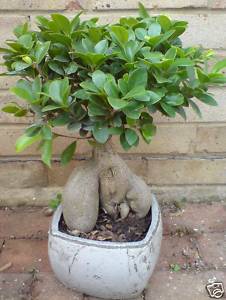
How to Care For Your Bonsai Ficus Ginseng Plant
The Bonsai Ficus Ginseng Plant is also known as Taiwan Ficus or Banyan Fig.
One of the attractions of this particular bonsai ficus ginseng is of course the roots which are usually exposed. Along with a thickish trunk and a canopy of dark green leaves it is a most attractive plant, creates a wonderful display in the home and is so easy to look after. This makes it ideal for newcomers to indoor plant keeping especially as it is very low maintenance.
Caring For The Bonsai Ficus Ginseng
Although the bonsai ficus ginseng can tolerate low light environments well, it does thrive much better in well lit environments and natural sunlight. So it is important to site the plant beside a window which receives lots of light for as much of the day as possible. I turn my own Ficus Ginseng by one quarter turn to the right each day so the whole ginseng plant has its fair share of the sun.
This bonsai tree does need a little tender loving care. It does need moderate watering in the winter, and I have had good results by feeding the potted soil with tomato plant liquid feed of all things. (Don't overdo this) Obviously, a little more water will be needed during the warmer summer season and less during the winter season.
The bonsai ficus ginseng does not mind being overwatered once in a while nor does it take offence when you forget to water it sometimes. It will however thrive more when misted regularly to mimic its rainforest home conditions. I do this daily using an old aerosol spray, and where possible I use rainwater rather than tap water which tends to contain Fluoride in this Country and I'm not sure this is good for the plant. Boiling tap water first may be another solution.
The bonsai ficus ginseng is basically a slow grower although this will depend on the condition of the plant and obviously on its environment. Repotting the bonsai plant depends on growth, so you may have to do this annually or bi-annually. I have had my ficus ginseng for about 6 months and growth is slow, so there is plenty of time to think about re-potting at a future time.
As for the soil, the plant does not seem too fussed and I have just used the soil which was in the pot when I bought the ginseng plant. Fertilizers may be added but the bonsai ficus ginseng is a good grower and can survive in lean conditions. (Try the tomato liquid fertilizer trick mentioned earlier)
The bonsai ficus ginseng tree is an easy tree to care for and you will not need to constantly monitor its state. At first you may be worried at the alarming habit the Ficus has of dropping its leaves daily. Look closely however at the plant and you will see that for all the dark green leaves which have been discarded, there will be a roughly equal number of light green new growth leaves to replace them.
The leaves of the bonsai ficus ginseng will need to be pinched when there are more than necessary to make a good looking crown. For every six new leaves that come out, you need to pinch off at least two or three to maintain its beauty and symmetry.
Overall the bonsai ficus ginseng is a hardy tree that is great for novices and beginners!
The Bonsai Ficus Ginseng Plant is also known as Taiwan Ficus or Banyan Fig.
One of the attractions of this particular bonsai ficus ginseng is of course the roots which are usually exposed. Along with a thickish trunk and a canopy of dark green leaves it is a most attractive plant, creates a wonderful display in the home and is so easy to look after. This makes it ideal for newcomers to indoor plant keeping especially as it is very low maintenance.
Caring For The Bonsai Ficus Ginseng
Although the bonsai ficus ginseng can tolerate low light environments well, it does thrive much better in well lit environments and natural sunlight. So it is important to site the plant beside a window which receives lots of light for as much of the day as possible. I turn my own Ficus Ginseng by one quarter turn to the right each day so the whole ginseng plant has its fair share of the sun.
This bonsai tree does need a little tender loving care. It does need moderate watering in the winter, and I have had good results by feeding the potted soil with tomato plant liquid feed of all things. (Don't overdo this) Obviously, a little more water will be needed during the warmer summer season and less during the winter season.
The bonsai ficus ginseng does not mind being overwatered once in a while nor does it take offence when you forget to water it sometimes. It will however thrive more when misted regularly to mimic its rainforest home conditions. I do this daily using an old aerosol spray, and where possible I use rainwater rather than tap water which tends to contain Fluoride in this Country and I'm not sure this is good for the plant. Boiling tap water first may be another solution.
The bonsai ficus ginseng is basically a slow grower although this will depend on the condition of the plant and obviously on its environment. Repotting the bonsai plant depends on growth, so you may have to do this annually or bi-annually. I have had my ficus ginseng for about 6 months and growth is slow, so there is plenty of time to think about re-potting at a future time.
As for the soil, the plant does not seem too fussed and I have just used the soil which was in the pot when I bought the ginseng plant. Fertilizers may be added but the bonsai ficus ginseng is a good grower and can survive in lean conditions. (Try the tomato liquid fertilizer trick mentioned earlier)
The bonsai ficus ginseng tree is an easy tree to care for and you will not need to constantly monitor its state. At first you may be worried at the alarming habit the Ficus has of dropping its leaves daily. Look closely however at the plant and you will see that for all the dark green leaves which have been discarded, there will be a roughly equal number of light green new growth leaves to replace them.
The leaves of the bonsai ficus ginseng will need to be pinched when there are more than necessary to make a good looking crown. For every six new leaves that come out, you need to pinch off at least two or three to maintain its beauty and symmetry.
Overall the bonsai ficus ginseng is a hardy tree that is great for novices and beginners!
Sunday, January 03, 2010
12:01 PM | Posted by
terry blackburn |
Edit Post
I came across this great Article from Whitney Segura, a writing colleague of mine at ezine articles. I highly recommend this to all gardeners.
How to Build Healthy Organic Soil
By ezinearticles.com expert Whitney Segura
Organic Soil Gardening How To Guide:
Those new to organic gardening sometimes think that growing one's own vegetables is all that is needed to be an organic gardener. But unless those vegetables are grown in healthy soil, the results may be less than ideal. Not only that, but some soil may contain unhealthy levels of lead or be on property which had contaminants. So it is important to be sure to start with good to excellent soil.
It is really not hard to make sure that soil meets the requirements.
First, consider the land. If it is in your backyard, think about the history of your home and land. Did you buy an older home which may have contained lead? Was reconstruction or remodeling done after purchase? If so, consider having your soil tested. This can be done professionally or with the help of home soil tests. Of course, you'll want to take steps to remove lead from soil.If lead exists in the soil, you may need to grow herbs and vegetables in containers located in an area of the yard that doesn't have high lead levels.
Another option?
A community garden. These allow gardeners to have individual plots or take home a portion of all vegetables grown, depending on the policies. They also help gardeners to network with others, make friends and have fun while participating in growing organic vegetables in the community. How do you make sure your soil is rich in nutrients and likely to promote healthy vegetables?
First, consider the types of herbs and vegetables you want to grow.
Some are very heavy feeders while others are not. Make sure you know not only your growing zone but what type of soil exists where you want to put your plants. Even in areas of the country where the soil tends to be very healthy, there can be patches of clay, sandy or other soil.
The nutrient content of the soil can also vary widely, with some areas of the same yard having rich, woodland soil while other areas have very little soil and many rocks (difficult to plow). There are testing kits to determine soil content, either done professionally or with home testing. Of course, you can "test" an area by seeing which plants do well but it is better to start with some knowledge of the soil itself.Start with a visual test.
Also, don't be afraid to start feeling the soil.
As odd as this may seem, good soil will have a certain feel. If there are plenty of earthworms, that is an excellent sign. Dark, loose soil and plenty of earthworms can be a sign of healthy, organic soil (assuming you've already tested for harmful substances). Adding compost to your soil will help add the nutrition. Of course, you'll want to avoid pesticides and substances that are high in dangerous chemicals. You are aiming for soil that is very loose and porous.Next, make sure you know the PH level in your soil.
Depending on test results, you'll want to make sure your soil is neither too acid or alkaline.
With luck, the PH will be ideal. Now it is time to move on to digging through the dirt. Is the soil compacted, with little space for plants to get air and water. If so, you may need to use a tiller or other equipment to break up the soil. The final step is to consider adding amendments, or extra fertilizers or nutrients to the soil. Garden centers often carry the specific types needed for certain areas but be sure to use organically friendly products. These beginning steps will help to build organic soil. Using rain barrels to collect water for the garden can also help to keep chemicals from the soil (depending on the chemical levels in drinking water).
Whitney Segura is the owner of http://www.bestgardengifts.com/ - Best Garden Gifts is a company that sells home hydroponics equipment,compost bins,greenhouses,plant containers and other green products.
Article Source: http://EzineArticles.com/?How-to-Build-Healthy-Organic-Soil&id=3469103 How to Build Healthy Organic Soil
How to Build Healthy Organic Soil
By ezinearticles.com expert Whitney Segura
Organic Soil Gardening How To Guide:
Those new to organic gardening sometimes think that growing one's own vegetables is all that is needed to be an organic gardener. But unless those vegetables are grown in healthy soil, the results may be less than ideal. Not only that, but some soil may contain unhealthy levels of lead or be on property which had contaminants. So it is important to be sure to start with good to excellent soil.
It is really not hard to make sure that soil meets the requirements.
First, consider the land. If it is in your backyard, think about the history of your home and land. Did you buy an older home which may have contained lead? Was reconstruction or remodeling done after purchase? If so, consider having your soil tested. This can be done professionally or with the help of home soil tests. Of course, you'll want to take steps to remove lead from soil.If lead exists in the soil, you may need to grow herbs and vegetables in containers located in an area of the yard that doesn't have high lead levels.
Another option?
A community garden. These allow gardeners to have individual plots or take home a portion of all vegetables grown, depending on the policies. They also help gardeners to network with others, make friends and have fun while participating in growing organic vegetables in the community. How do you make sure your soil is rich in nutrients and likely to promote healthy vegetables?
First, consider the types of herbs and vegetables you want to grow.
Some are very heavy feeders while others are not. Make sure you know not only your growing zone but what type of soil exists where you want to put your plants. Even in areas of the country where the soil tends to be very healthy, there can be patches of clay, sandy or other soil.
The nutrient content of the soil can also vary widely, with some areas of the same yard having rich, woodland soil while other areas have very little soil and many rocks (difficult to plow). There are testing kits to determine soil content, either done professionally or with home testing. Of course, you can "test" an area by seeing which plants do well but it is better to start with some knowledge of the soil itself.Start with a visual test.
Also, don't be afraid to start feeling the soil.
As odd as this may seem, good soil will have a certain feel. If there are plenty of earthworms, that is an excellent sign. Dark, loose soil and plenty of earthworms can be a sign of healthy, organic soil (assuming you've already tested for harmful substances). Adding compost to your soil will help add the nutrition. Of course, you'll want to avoid pesticides and substances that are high in dangerous chemicals. You are aiming for soil that is very loose and porous.Next, make sure you know the PH level in your soil.
Depending on test results, you'll want to make sure your soil is neither too acid or alkaline.
With luck, the PH will be ideal. Now it is time to move on to digging through the dirt. Is the soil compacted, with little space for plants to get air and water. If so, you may need to use a tiller or other equipment to break up the soil. The final step is to consider adding amendments, or extra fertilizers or nutrients to the soil. Garden centers often carry the specific types needed for certain areas but be sure to use organically friendly products. These beginning steps will help to build organic soil. Using rain barrels to collect water for the garden can also help to keep chemicals from the soil (depending on the chemical levels in drinking water).
Whitney Segura is the owner of http://www.bestgardengifts.com/ - Best Garden Gifts is a company that sells home hydroponics equipment,compost bins,greenhouses,plant containers and other green products.
Article Source: http://EzineArticles.com/?How-to-Build-Healthy-Organic-Soil&id=3469103 How to Build Healthy Organic Soil
Monday, December 28, 2009
11:52 AM | Posted by
terry blackburn |
Edit Post
Ok - the hangover is a receding memory - Christmas is over for another year.
Its a freezing January out there in England, but that is helping out old Mother Nature enormously by breaking up the ground in anticipation of the Spring - it's also killing off those weeds that won't have a chance to flourish as they do in mild Winter conditions. So what is the first thing to do as we contemplate the frozen earth out there?
Here is a List of the jobs to focus on during this month of January
Lawns
After the New Year, your life will return to normal. The holiday season is officially over and you will be anticipating the arrival of spring. Your lawn may not look like much. If you live in a region that sees a lot of snow, you may have been looking at a white blanket for weeks. Your grass may appear lifeless and your plants have long since bloomed in the sunshine.
But there is work to be done. You will have to go outside at least once a week and walk through your property and check for problems that you will have to take care of once the warmer months have arrived.
In January, you should be concerned with damage to your lawn sculptures and other decorative items. When inspecting these items, you should:
Its a freezing January out there in England, but that is helping out old Mother Nature enormously by breaking up the ground in anticipation of the Spring - it's also killing off those weeds that won't have a chance to flourish as they do in mild Winter conditions. So what is the first thing to do as we contemplate the frozen earth out there?
Here is a List of the jobs to focus on during this month of January
Lawns
After the New Year, your life will return to normal. The holiday season is officially over and you will be anticipating the arrival of spring. Your lawn may not look like much. If you live in a region that sees a lot of snow, you may have been looking at a white blanket for weeks. Your grass may appear lifeless and your plants have long since bloomed in the sunshine.
But there is work to be done. You will have to go outside at least once a week and walk through your property and check for problems that you will have to take care of once the warmer months have arrived.
In January, you should be concerned with damage to your lawn sculptures and other decorative items. When inspecting these items, you should:
- Check for cracks in the foundation of concrete bird baths, sculptures, and statues
- Look for signs of discoloration that could be the early signs of rust.
- Check for water and snow damage
- Check for broken pieces
- Remove any decorative items that cannot be fixed
If possible, you should wrap up these items in order to protect them from the snow and water. If you can move them to a safer place, that would also help. Lawn decorations can be expensive and in many cases, one of a kind. Protecting these items should be high on your list when getting ready for winter and also during the winter season.
Thursday, December 03, 2009
5:37 PM | Posted by
terry blackburn |
Edit Post
Over time the soil under your lawn becomes compacted. Soil compaction makes it harder for the grass roots to grow and reduces the absorption of water. Both of these problems cause a lawn to become stressed. When a lawn is under stress it tends to brown easily and is less resistant to disease.
In order to to reduce compaction, you must aerate the soil periodically. Aerating can be done by poking holes into the ground or by pulling plugs out of the ground. The latter method is preferred because it loosens the soil while poking holes actually packs the soil tighter. However, either method is beneficial. By making holes, you enable more water to soak in and you let fertilizer reach the roots.
How to Aerate my Lawn
You can use a tractor with an aeration rig, but if you are like most people, you don't own a tractor. You can purchase shoes with long spikes or a set of spikes on a handle. Both of these will take some time to cover your entire lawn. To make faster work of this task you can rent an aerator from a local tool center or you can hire someone to do it for you. Often the cost of a pro is little more than the cost to rent the tool, so do some checking first.
When to Aerate my Lawn
Ryegrass, bluegrass, bentgrass and fescue lawns should generally be aerated in the fall. Bermuda, Bahia, St. Augustine and other warm climate grasses should be aerated in the late spring.
After aerating your lawn, this may be a good time to apply seed, compost or fertilizer.
Terry Blackburn. Internet Marketing Consultant, living in South Shields in the North-East of England. Author and Producer of blog http://www.lawnsurgeon.blogspot.com Author of "Your Perfect Lawn," a 90 Page eBook devoted to Lawn Preparation, Lawn Care and Maintenance.
Article Source: http://EzineArticles.com/?expert=Terry_Blackburn
In order to to reduce compaction, you must aerate the soil periodically. Aerating can be done by poking holes into the ground or by pulling plugs out of the ground. The latter method is preferred because it loosens the soil while poking holes actually packs the soil tighter. However, either method is beneficial. By making holes, you enable more water to soak in and you let fertilizer reach the roots.
How to Aerate my Lawn
You can use a tractor with an aeration rig, but if you are like most people, you don't own a tractor. You can purchase shoes with long spikes or a set of spikes on a handle. Both of these will take some time to cover your entire lawn. To make faster work of this task you can rent an aerator from a local tool center or you can hire someone to do it for you. Often the cost of a pro is little more than the cost to rent the tool, so do some checking first.
When to Aerate my Lawn
Ryegrass, bluegrass, bentgrass and fescue lawns should generally be aerated in the fall. Bermuda, Bahia, St. Augustine and other warm climate grasses should be aerated in the late spring.
After aerating your lawn, this may be a good time to apply seed, compost or fertilizer.
Terry Blackburn. Internet Marketing Consultant, living in South Shields in the North-East of England. Author and Producer of blog http://www.lawnsurgeon.blogspot.com Author of "Your Perfect Lawn," a 90 Page eBook devoted to Lawn Preparation, Lawn Care and Maintenance.
Article Source: http://EzineArticles.com/?expert=Terry_Blackburn
Labels:
aerate my lawn
|
6
comments
2:01 PM | Posted by
terry blackburn |
Edit Post
Some people like the sight of yellow dandelion flowers in their lawn. Others may even appreciate their skyward-stretching puffballs. But if you're not one of those people, we can suggest some natural and organic methods for controlling dandelions.
Pulling dandelions by hand is not that easy, but it can be done. You need to get the whole tap root out—if you don't, the piece you've left in the ground will sprout new foliage and, eventually, yellow dandelion flowers and white puffballs.
For little dandelion weeds, pulling the tap root out is not too hard if you're careful. For larger dandelion specimens, it can be nearly impossible. A special "dandelion digger" tool can help, as can attempting your weed-pulling operation after it's rained, when the ground it still a little loose.
Dandelions grow in one of two ways; from a dandelion seed that germinates, or from a still-viable piece of dandelion tap root that's under the surface. If you can interrupt the seed production cycle AND starve the tap roots of nutrients, you can defeat your lawn's dandelions without having to buy any chemicals or other products. Here's how to approach this:
1. Pick off the Heads — As soon as you see a dandelion plant's yellow flowers, pick the heads off. That will prevent them from getting to the puffball stage, when they release the seeds for the next generation of your lawn's worst nightmare.
2. Pick off the Leaves — Picking the leaves off a dandelion will not kill it because the tap root remains below the surface and will quickly send up new leaves. But repeatedly picking off the leaves will eventually starve the tap root of nutrients and kill the weed.
3. Corn gluten meal—which, just like it sounds, is naturally derived from corn. It acts by suppressing the germination process of a variety of weed seeds, including crabgrass and dandelion.
A multi-year program of applying corn gluten meal every spring will eventually give you a dandelion - free lawn. Remember that corn gluten meal will suppress germination of grass seeds as well, so time your applications away from reseedings.
The only other downside of corn gluten meal is that it will also kill the beneficial, nitrogen-fixing clover in your lawn, but we recognize that from some people's perspectives, that's a good thing.
Corn gluten meal also benefits your grass by adding nitrogen to the soil.
If you like spending money on mechanical gadgets to help you with your gardening, you'll find a variety of appliances such as flame weeders, mechanical pullers, water-powered weeders, and heat zappers, all designed to kill your dandelions off. These do work but are expensive.
Remember - the war against dandelions is a constant battle! Relax at your peril!
I would be very interested to have your comments on this Article.
Article Source: http://EzineArticles.com/?expert=Terry_Blackburn
Labels:
lawn care dandelions
|
0
comments
1:11 PM | Posted by
terry blackburn |
Edit Post
So your Lawn is full of the dreaded Clover. Well did you know that until fairly recently, clover was not considered as a weed at all and indeed was liked by gardeners because it gave their Lawn a deeper green look.
This happens because Clover removes Nitrogen from the air and transfers it to your Lawn. In fact, some garden suppliers include Clover in their proprietary lawn mixes even today! It helps the grass grow more pest resistant, reduces the amount of fertilizer required, (so is good for the environment) and leaves the Lawn much healthier.
As a kid you probably went clover searching - looking for that one magical four-leaf charm. Seeing clover's shamrocks and little white or pink flowers in your lawn nowadays probably doesn't make you feel lucky anymore. Like many a perennial weed, clover can be hard to evict from your lawn.
As a result, it's one of the most common weeds around. Even though it's green and its flowers are, admit it, sort of cute, it attracts bees, which can be an underfoot danger, and is also quite slippery when wet, another danger.
So your probably asking what's the best method of Killing Clover In The Lawn?
The most effective method of controlling clover is to maintain a dense and healthy turf area. Often weeds can be easily kept out if the Ph and nutrients levels are optimum. Then a cornmeal application can be use to control the weeds. Use 10 pounds per 1,000 sq ft every 120 days simply as a fertilizer as well.
Mowing height and the frequency of mowing also will deter these weeds.
Clover does especially well in moist conditions and in less than optimally fertile soil. The one nutrient it really goes for is phosphorous.
So if you cut back on the water and up the level of the nutrients, other than phosphorous, that your lawn needs to thrive, your lawn will do better and weeds like clover will do worse. The best defense against any weed, clover included, is a healthy lawn.
Pulling weeds by hand also works in small lawns. Clover has a taproot you can easily dig out by hand. For spot control a little spade action is hard to beat.
In the last resort, chemical action is sometimes necessary, especially when managing large areas. Always read and follow directions on the label and keep pets and children away! Post-emergent herbicides do a great job on clover. A weed-and-feed that lists clover as among its targets will help tackle any serious clover encroachments.
Terry Blackburn. Internet Marketing Consultant, living in South Shields in the North-East of England. Author and Producer of blog http://www.lawnsurgeon.blogspot.com./ Author of "Your Perfect Lawn," a 90 Page eBook devoted to Lawn Preparation, Lawn Care and Maintenance.
I would be very interested to have your comments on this Article.
Article Source: http://EzineArticles.com/?expert=Terry_Blackburn
This happens because Clover removes Nitrogen from the air and transfers it to your Lawn. In fact, some garden suppliers include Clover in their proprietary lawn mixes even today! It helps the grass grow more pest resistant, reduces the amount of fertilizer required, (so is good for the environment) and leaves the Lawn much healthier.
As a kid you probably went clover searching - looking for that one magical four-leaf charm. Seeing clover's shamrocks and little white or pink flowers in your lawn nowadays probably doesn't make you feel lucky anymore. Like many a perennial weed, clover can be hard to evict from your lawn.
As a result, it's one of the most common weeds around. Even though it's green and its flowers are, admit it, sort of cute, it attracts bees, which can be an underfoot danger, and is also quite slippery when wet, another danger.
So your probably asking what's the best method of Killing Clover In The Lawn?
The most effective method of controlling clover is to maintain a dense and healthy turf area. Often weeds can be easily kept out if the Ph and nutrients levels are optimum. Then a cornmeal application can be use to control the weeds. Use 10 pounds per 1,000 sq ft every 120 days simply as a fertilizer as well.
Mowing height and the frequency of mowing also will deter these weeds.
Clover does especially well in moist conditions and in less than optimally fertile soil. The one nutrient it really goes for is phosphorous.
So if you cut back on the water and up the level of the nutrients, other than phosphorous, that your lawn needs to thrive, your lawn will do better and weeds like clover will do worse. The best defense against any weed, clover included, is a healthy lawn.
Pulling weeds by hand also works in small lawns. Clover has a taproot you can easily dig out by hand. For spot control a little spade action is hard to beat.
In the last resort, chemical action is sometimes necessary, especially when managing large areas. Always read and follow directions on the label and keep pets and children away! Post-emergent herbicides do a great job on clover. A weed-and-feed that lists clover as among its targets will help tackle any serious clover encroachments.
Terry Blackburn. Internet Marketing Consultant, living in South Shields in the North-East of England. Author and Producer of blog http://www.lawnsurgeon.blogspot.com./ Author of "Your Perfect Lawn," a 90 Page eBook devoted to Lawn Preparation, Lawn Care and Maintenance.
I would be very interested to have your comments on this Article.
Article Source: http://EzineArticles.com/?expert=Terry_Blackburn
11:52 AM | Posted by
terry blackburn |
Edit Post
Fennel
OK - Let's start with a History lesson. In 470 BC there was a famous Battle between the Persians and the Greeks at a place called Marathon. News of this victory was carried to the Greeks by Pheidippides who ran 26 miles to report the victory and promptly died as a result of his epic run.
The battle was ever after immortalised in the Olympic games with the introduction of a 26 mile race called a Marathon in honour of Pheidippides' heroic efforts.
The battle itself was fought in a field of Fennel and the ancient Greek word for fennel is in fact "Marathon."
Fennel is native to hot climes such as the Mediterranean and was grown for its liqourice smell and tasty leaves. The plant has been around for some time and was used by Roman soldiers in particular for the relief of flatulence.
The plant was brought over to England we think by the Roman Army and was successfully introduced into the environment of the time and flourished.
In those days the climate in Britain was much warmer than today - in fact the Roman Army grew grape vines on the Roman Wall in the north of England. That tells us a lot about the latest Scientists scare - Global Warming. It was much warmer 2000 years ago before Industrialisation than it is today - but I digress.
The plant grows all year round and is made up of three different parts:
1. Leaves
2. Bulb
3. Stalk
All can be eaten and Fennel is well established as an herbal aid to Cooking but in addition can be eaten raw when it smells of liqourice and is crispy and crunchy.
Fennel has many health benefits which I will go into in my next Article. For now I will recommend the use of Fennel seed to make an infusion of Fennel Tea. Simply add a teaspoon of Fennel seeds into a tea pot, leave to infuse for 5 minutes (or leave to stew as my Gran used to say) and then strain into a cup as normal ( the Romans did not have tea bags so I assume you still have a tea strainer). Then drink the brew neat without additions to get the full taste and benefits of the brew.
i hope you find this article useful and I will return to the subject another time to discuss the health benefits of Fennel and look at cultivation issues.
Terry Blackburn. Internet Marketing Consultant, living in South Shields in the North-East of England. Author and Producer of blog http://www.lawnsurgeon.blogspot.com/. Author of "Your Perfect Lawn," a 90 Page eBook devoted to Lawn Preparation, Lawn Care and Maintenance.
I would be very interested to have your comments on this Article.
Aticle Source: http://EzineArticles.com/?expert=Terry_Blackburn
Terry Blackburn - EzineArticles Expert Author
Terry Blackburn. Internet Marketing Consultant, living in South Shields in the North-East of England. Author and Producer of blog http://www.lawnsurgeon.blogspot.com/. Author of "Your Perfect Lawn," a 90 Page eBook devoted to Lawn Preparation, Lawn Care and Maintenance.
I would be very interested to have your comments on this Article.
Aticle Source: http://EzineArticles.com/?expert=Terry_Blackburn
Terry Blackburn - EzineArticles Expert Author
Labels:
Fennel,
fennel benefits,
fennel recipe,
fennel recipes,
fennel seed,
fennel seeds,
fennel tea
|
0
comments
Wednesday, December 02, 2009
4:00 PM | Posted by
terry blackburn |
Edit Post
gardening
Fennel is an herb, all parts on the plant are edible -- the leaves, stems, seeds and roots. The swollen stems at the base of the plant are the part that we are concerned with here, and why fennel has been included in the list of 'Growing vegetables'. Fennel contains these nutrients: Calcium Magnesium, Phosphorus, Sodium, Folic acid, Vitamin C, Potassium, and Phytoestrogens, and has a subtle anise-like flavour and scent
It can be eaten raw as a salad herb or cooked and served with oil, butter or sauce. Fennel can be cooked simply by cutting the bulb into four, removing the centre core of each quarter, adding a little lemon juice and a small knob of butter and cooking it for about twenty minutes on the high setting in a microwave oven.
Cool weather is best for growing fennel. Seeds germinate best at soil temperatures of 61 to 64 F. The plant has a tendency to bolt (flower prematurely) in warm summer weather. When you are growing fennel for the bulb, select a variety that will grow for a long time before bolting in order to produce better-developed bulbs.
Sowing
Fennel quickly develops a large taproot. The seed can be started indoors, then transplanted outside when quite small, but it is usually a better idea to plant the seeds directly out in the garden. Fennel can be planted either in early spring or in the autumn depending on the variety. The plant generally makes it through winter with no trouble, so seeds can even be planted in late autumn to get the plant growing very early in spring.
General Care
Fennel prefers frequent irrigation for rapid growth. Moisture stress causes the basal stalk to split. Fennel plants are believed to release a chemical that impairs the growth of some other plants, so it should not be grown very close to beans, tomatoes or members of the cabbage family.
Sowing
Sow the seed in spring or autumn, the seeds should be sown in medium to light well-drained soil in a sunny location. Fennel thrives on well-drained loam soil. The seed are sown thinly in rows, which are 1 ft. (30cm) apart. Bulb fennel should be thinned to 10 to 14 in. (254mm-355mm) apart when the seedlings are large enough to handle.
Harvest
Harvest just before flowering, lifting the plant, including the bulbs, roots, and some foliage. Finally, the fennel bulb, with some foliage, is cleaned of soil, washed, and can be stored in a cool place.
Pests:
Fennel competes poorly with weeds. Aphids can cause severe damage so as soon as there is signs of aphids, use a garlic spray to disperse them.
Varieties:
Bulbous, Finacchio, or Florence fennel - Height: about 2 feet. (60cm) Is grown for its enlarged bulb.
Terry Blackburn. Internet Marketing Consultant, living in South Shields in the North-East of England. Author and Producer of blog http://www.lawnsurgeon.blogspot.com./ Author of "Your Perfect Lawn," a 90 Page eBook devoted to Lawn Preparation, Lawn Care and Maintenance. Find it at www.lawnsurgeon.com
I would be very interested to have your comments on this Article.
Article Source: http://EzineArticles.com/?expert=Terry_Blackburn
Terry Blackburn - EzineArticles Expert Author
Fennel is an herb, all parts on the plant are edible -- the leaves, stems, seeds and roots. The swollen stems at the base of the plant are the part that we are concerned with here, and why fennel has been included in the list of 'Growing vegetables'. Fennel contains these nutrients: Calcium Magnesium, Phosphorus, Sodium, Folic acid, Vitamin C, Potassium, and Phytoestrogens, and has a subtle anise-like flavour and scent
It can be eaten raw as a salad herb or cooked and served with oil, butter or sauce. Fennel can be cooked simply by cutting the bulb into four, removing the centre core of each quarter, adding a little lemon juice and a small knob of butter and cooking it for about twenty minutes on the high setting in a microwave oven.
Cool weather is best for growing fennel. Seeds germinate best at soil temperatures of 61 to 64 F. The plant has a tendency to bolt (flower prematurely) in warm summer weather. When you are growing fennel for the bulb, select a variety that will grow for a long time before bolting in order to produce better-developed bulbs.
Sowing
Fennel quickly develops a large taproot. The seed can be started indoors, then transplanted outside when quite small, but it is usually a better idea to plant the seeds directly out in the garden. Fennel can be planted either in early spring or in the autumn depending on the variety. The plant generally makes it through winter with no trouble, so seeds can even be planted in late autumn to get the plant growing very early in spring.
General Care
Fennel prefers frequent irrigation for rapid growth. Moisture stress causes the basal stalk to split. Fennel plants are believed to release a chemical that impairs the growth of some other plants, so it should not be grown very close to beans, tomatoes or members of the cabbage family.
Sowing
Sow the seed in spring or autumn, the seeds should be sown in medium to light well-drained soil in a sunny location. Fennel thrives on well-drained loam soil. The seed are sown thinly in rows, which are 1 ft. (30cm) apart. Bulb fennel should be thinned to 10 to 14 in. (254mm-355mm) apart when the seedlings are large enough to handle.
Harvest
Harvest just before flowering, lifting the plant, including the bulbs, roots, and some foliage. Finally, the fennel bulb, with some foliage, is cleaned of soil, washed, and can be stored in a cool place.
Pests:
Fennel competes poorly with weeds. Aphids can cause severe damage so as soon as there is signs of aphids, use a garlic spray to disperse them.
Varieties:
Bulbous, Finacchio, or Florence fennel - Height: about 2 feet. (60cm) Is grown for its enlarged bulb.
Terry Blackburn. Internet Marketing Consultant, living in South Shields in the North-East of England. Author and Producer of blog http://www.lawnsurgeon.blogspot.com./ Author of "Your Perfect Lawn," a 90 Page eBook devoted to Lawn Preparation, Lawn Care and Maintenance. Find it at www.lawnsurgeon.com
I would be very interested to have your comments on this Article.
Article Source: http://EzineArticles.com/?expert=Terry_Blackburn
Terry Blackburn - EzineArticles Expert Author
3:09 PM | Posted by
terry blackburn |
Edit Post
I was asked by a pal this week about how to prune Fennel. An unusual request for this is not a plant I have grown myself. Having done some digging around I was amazed at the uses to be made of this wonderful plant. It's history and origins are fascinating and I will be putting together an Article on Fennel in the next couple of days.
To answer my friend's query as to how to prune Fennel I would recommend you snip Fennel leaves throughout the growing season to add flavor to salads, fish and potatoes. Fennel bulbs can be harvested at any time once they have reached about 2.5 to 3 ins. across. Don't wait much beyond this time as the plant will become rather tough. Simply slice through the root just below the bulb with a sharp knife, wash the bulbs, removing any damaged outer leaves, dry thoroughly, and store in plastic bags in the refrigerator. Freshly harvested bulbs may be stored up to a week, but for best flavor I recommend immediate use.
As I said before, the uses for this plant are many and varied, and I will publish a full Article on Fennel and its history and properties later this week.
To answer my friend's query as to how to prune Fennel I would recommend you snip Fennel leaves throughout the growing season to add flavor to salads, fish and potatoes. Fennel bulbs can be harvested at any time once they have reached about 2.5 to 3 ins. across. Don't wait much beyond this time as the plant will become rather tough. Simply slice through the root just below the bulb with a sharp knife, wash the bulbs, removing any damaged outer leaves, dry thoroughly, and store in plastic bags in the refrigerator. Freshly harvested bulbs may be stored up to a week, but for best flavor I recommend immediate use.
As I said before, the uses for this plant are many and varied, and I will publish a full Article on Fennel and its history and properties later this week.
12:03 PM | Posted by
terry blackburn |
Edit Post
Today i received a Ficus Ginseng plant as a gift and knowing very little about keeping them, I have started some basic research.
Apparently...
. A ficus bonsai tree may look good in your home but if you do not have the time and the patience to take care of it, you might as well forget the idea. You see, ficus bonsai trees are sensitive to changing environments and need constant attention. You need to tend to your tree every day to keep it healthy and beautiful. Therefore, busy people who keep erratic work and social schedules should not keep this type of plant at home.
. On the other hand, if you are one of those people who works a regular 9 to 5 job and then comes home to an empty house to eat dinner in the kitchen and then watch TV for the rest of the night, keeping a ficus bonsai plant is a good thing for you to do. Instead of wasting all your time sitting on the couch and watching TV when you get home, you can keep yourself busy tending to your bonsai tree. Tending to your bonsai tree is really a lot more relaxing and challenging than watching TV.
. Ficus will grow decently in low light, but thrive in high light conditions.
. Prune back to 2-4 leaves after 6-10 leaves have grown. use a dull pruning tool on Ficus, as a clean cut made by a sharp tool tends to bleed more than a dull cut.
. Water moderately, increasing in summer and decreasing in winter. Many Ficus are very tolerant of being over or under watered, which makes them ideal for beginners. The Ficus also enjoys a daily misting to maintain humidity.
. Repot every 2-3 years, although some will grow rapidly enough that yearly re-potting may be necessary. The best time is before a new growth spurt, especially in spring, but Ficus can literally be re-potted any time of year if reasonable after-care is given.
. Roots can easily be pruned by half. Basic bonsai soil is recommended, although Ficus tolerates many soil conditions.
All in all the ideal indoor companion without the need for walkies or a pooper scoop!
Terry Blackburn. Internet Marketing Consultant, living in South Shields in the North-East of England. Author and Producer of blog http://www.lawnsurgeon.blogspot.com. Author of "Your Perfect Lawn," a 90 Page eBook devoted to Lawn Preparation, Lawn Care and Maintenance. Find it at http://www.lawnsurgeon.com
I would be very interested to have your comments on this Article.
Article Source: http://EzineArticles.com/?expert=Terry_Blackburn
Apparently...
. A ficus bonsai tree may look good in your home but if you do not have the time and the patience to take care of it, you might as well forget the idea. You see, ficus bonsai trees are sensitive to changing environments and need constant attention. You need to tend to your tree every day to keep it healthy and beautiful. Therefore, busy people who keep erratic work and social schedules should not keep this type of plant at home.
. On the other hand, if you are one of those people who works a regular 9 to 5 job and then comes home to an empty house to eat dinner in the kitchen and then watch TV for the rest of the night, keeping a ficus bonsai plant is a good thing for you to do. Instead of wasting all your time sitting on the couch and watching TV when you get home, you can keep yourself busy tending to your bonsai tree. Tending to your bonsai tree is really a lot more relaxing and challenging than watching TV.
. Ficus will grow decently in low light, but thrive in high light conditions.
. Prune back to 2-4 leaves after 6-10 leaves have grown. use a dull pruning tool on Ficus, as a clean cut made by a sharp tool tends to bleed more than a dull cut.
. Water moderately, increasing in summer and decreasing in winter. Many Ficus are very tolerant of being over or under watered, which makes them ideal for beginners. The Ficus also enjoys a daily misting to maintain humidity.
. Repot every 2-3 years, although some will grow rapidly enough that yearly re-potting may be necessary. The best time is before a new growth spurt, especially in spring, but Ficus can literally be re-potted any time of year if reasonable after-care is given.
. Roots can easily be pruned by half. Basic bonsai soil is recommended, although Ficus tolerates many soil conditions.
All in all the ideal indoor companion without the need for walkies or a pooper scoop!
Terry Blackburn. Internet Marketing Consultant, living in South Shields in the North-East of England. Author and Producer of blog http://www.lawnsurgeon.blogspot.com. Author of "Your Perfect Lawn," a 90 Page eBook devoted to Lawn Preparation, Lawn Care and Maintenance. Find it at http://www.lawnsurgeon.com
I would be very interested to have your comments on this Article.
Article Source: http://EzineArticles.com/?expert=Terry_Blackburn
Subscribe to:
Posts (Atom)
How to Start A Garden!
VideoJug: How To Start A Garden I thought today we may spare a thought for all those people out there who would dearly love to start a garden, but lack the knowledge or experience to allow them to do so. So I have put up this video to show the basics in the hope that it will encourage more people to learn to grow things.